How should you cut your toenails? Why does hard skin keep coming back? When should you get a sore toe checked? Most everyday foot care starts with washing and drying your feet, wearing shoes with room for your toes and checking for changes in your skin and nails. If pain keeps coming back, affects how you walk or comes with signs of infection, it’s worth getting advice.
At Louisa Seymour Podiatry in Brentwood, we help people with problems ranging from painful corns to nails they can no longer comfortably trim themselves. Here are seven practical answers to common questions about looking after your feet.
1. What should I do every day to keep my feet healthy?
Wash your feet and dry them thoroughly, especially between your toes. Put on clean socks each day and look for blisters, cracks or areas where your shoes have rubbed. If your heels or soles are dry, apply moisturiser there and keep the spaces between your toes dry.
When trying on shoes, check that you can wiggle your toes and that the heel feels secure. If the same spot rubs every time you wear a particular pair, check how much space you have around that part of your foot.
2. How should I cut my toenails to prevent ingrown toenails?
Trim toenails straight across and leave a little length at the edge. Cutting them very short or rounding off the corners can encourage the nail to grow into the surrounding skin. If a nail is already sore at the edge, avoid digging down the side or trying to cut out the corner yourself.
Thick nails, poor eyesight or difficulty reaching your feet can make trimming awkward. A routine foot care appointment can help if you’re struggling to manage your nails comfortably.
3. When should I get an ingrown toenail checked?
Get advice if the pain persists, gets worse or keeps returning. An ingrown toenail often causes tenderness and swelling along one edge of the nail, and tight shoes can make it more uncomfortable.
If the toe is painful and swollen with pus, or you feel hot or shivery, contact your GP. If you have diabetes and develop an ingrown toenail, contact your GP or diabetes foot care team for advice. See the NHS guide to ingrown toenails.
4. Why do corns and hard skin keep coming back?
Corns and calluses develop where the skin is repeatedly pressed or rubbed. A corn is usually a small, concentrated patch of hard skin, while a callus tends to cover a wider area. If the same shoe seam or pressure point keeps irritating your foot, the hard skin can return after it’s removed.
Check where the hard skin appears and which shoes make it sore. That can give your podiatrist a clue about where the pressure is coming from. Avoid cutting hard skin off yourself. If you have diabetes or poor circulation, seek professional advice before trying to treat corns or calluses at home. Find out about corn and callus treatment in Brentwood.
5. Is itchy, peeling skin between my toes athlete’s foot?
It could be. Athlete’s foot often causes itching and flaky or pale patches between the toes, though other skin conditions can look similar. A pharmacist can advise whether an antifungal cream, spray or powder is suitable.
Dry carefully between your toes after washing, change socks daily and use a separate towel for your feet. If treatment from the pharmacy hasn’t helped, or your foot or leg becomes hot, painful and red, contact your GP. See the NHS advice on athlete’s foot.
6. How should I look after my feet if I have diabetes?
Check your feet every day, including the soles and between your toes. A mirror can help you see underneath. Keep up with your NHS diabetes foot checks and follow any individual advice from your diabetes team. Diabetes can reduce feeling in your feet, so you may miss a blister or cut if you rely on pain to tell you something is wrong.
If you find a new wound or blister, or notice unexplained warmth, swelling or a change in skin colour, seek urgent advice from your diabetes foot care team or GP. See NHS England’s diabetic foot care guidance.
7. When should I see a podiatrist?
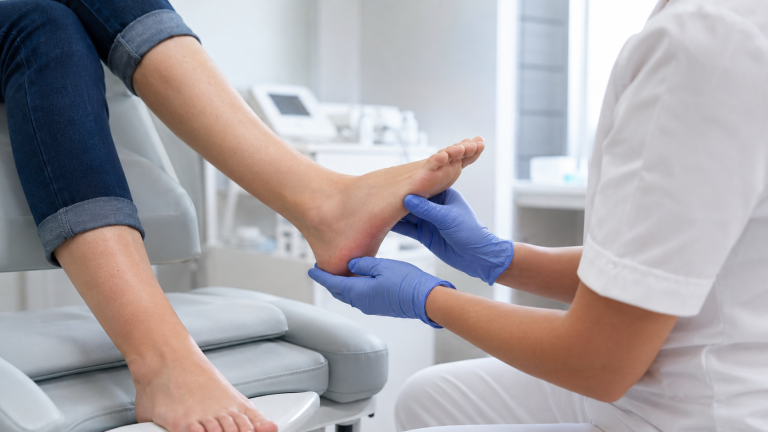
A podiatry appointment is a good starting point if a corn makes walking uncomfortable, hard skin keeps returning or you struggle to cut your toenails. You can also ask for advice if a foot problem is making you change how you walk or stopping you from wearing your usual shoes. Make a note of when it started and which shoes or activities make it worse.
Book a foot care appointment in Brentwood
Louisa Seymour Podiatry offers routine foot and nail care at 30 Ongar Road, Brentwood, Essex, CM15 9AX. To discuss a concern or arrange an appointment, call 01277 216870 or contact Louisa Seymour Podiatry.