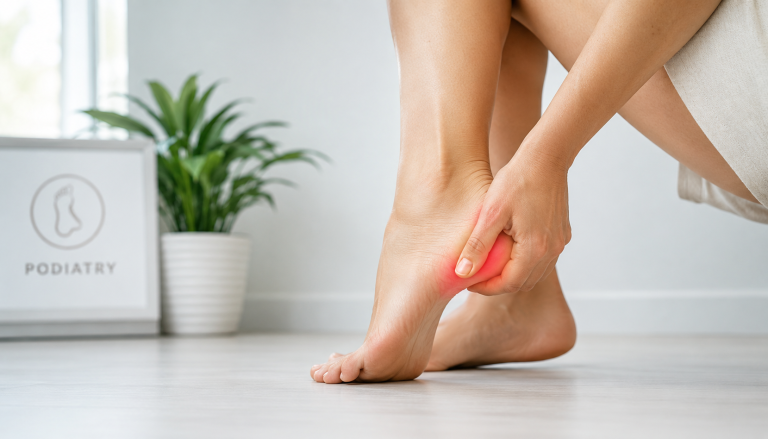
A sharp pain in the ball of the foot can stop you in your tracks. It might feel like you’re stepping on a pebble, getting a sudden stabbing sensation, or feeling a burning pain under the toes. Sometimes it comes and goes. Sometimes it builds over weeks. Either way, it’s your body’s way of saying something in your foot is not happy.
The “ball of the foot” is the padded area under the heads of the metatarsal bones (the long bones just behind your toes). That area takes a lot of force every time you walk, run, climb stairs, or stand for long periods. Because it handles so much pressure, a few different problems can show up with similar symptoms.
Below are some of the most common causes of sharp pain in the ball of the foot, what it tends to feel like, and when it’s worth seeing a podiatrist.
1) Metatarsalgia (overload in the forefoot)
Metatarsalgia is a general term that means pain and inflammation around the metatarsal heads. It’s usually caused by repeated pressure on the front of the foot.
What it can feel like:
- Sharp or aching pain under one or more toes
- Pain that’s worse when walking or standing
- Feeling like you’re walking on a stone
- Tenderness under the ball of the foot
Common triggers include: lots of standing, sudden increase in walking or running, high heels, thin-soled shoes, and changes in body weight. Foot shape can play a big role too, such as a high arch, a long second toe, or a dropped forefoot.
2) Morton’s neuroma (nerve irritation between the toes)
A Morton’s neuroma is not truly a tumour. It’s usually a thickening or irritation of the nerve between the metatarsal bones, most commonly between the 3rd and 4th toes.
What it can feel like:
- Sharp, burning pain in the ball of the foot
- Numbness or tingling in the toes
- A feeling of a lump or pebble in the shoe
- Pain that is worse in tight or narrow shoes
People often describe needing to take their shoe off and rub their foot for relief. If this sounds familiar, footwear and pressure management can make a big difference.
3) Capsulitis (irritation of the joint under the toe)
Capsulitis is inflammation of the capsule that surrounds the joint at the base of the toe, often affecting the second toe joint. It can happen when the joint is repeatedly overloaded, sometimes alongside changes in toe position over time.
What it can feel like:
- Pain directly under a specific toe joint
- Swelling or a bruised feeling under the ball of the foot
- Pain when pushing off the toes
- Sometimes the toe starts to drift or lift
This is one of those issues where early treatment helps, because long-term overload can lead to more structural change.
4) Stress fracture (tiny crack from overuse)
A stress fracture is a small crack in the bone caused by repeated force, rather than one big injury. In the forefoot, it can affect the metatarsals.
What it can feel like:
- Sharp pain that worsens with activity
- Tenderness in a specific spot
- Swelling on the top or bottom of the foot
- Pain that may persist even after resting (later on)
If you’ve recently increased your walking or running, changed footwear, or you’re on your feet all day, this is worth taking seriously. Persistent pain in one precise area, especially with swelling, should be assessed.
5) Sesamoiditis (pain under the big toe joint)
Under the big toe joint are two small bones called the sesamoids. They act like pulleys for tendons and help with push-off. Overload can irritate them, causing sesamoiditis.
What it can feel like:
- Pain under the big toe side of the ball of the foot
- Pain when pushing off or going onto tiptoes
- Soreness that builds gradually
This is common in people who do lots of forefoot loading (running, dancing, gym work, certain sports injuries), and in people who wear shoes with minimal cushioning.
6) Callus, corns, or fat pad irritation
Sometimes the pain is coming from the skin and padding, not deep structures. Thickened skin (callus) can develop under pressure points, and the natural fat pad in the forefoot can become irritated or thinner with age.
What it can feel like:
- Sharp pain in a specific pressure spot
- Worse when barefoot on hard floors
- Relief when cushioning is added
- Visible hard skin or a central “core” (corn)
Routine podiatry care and pressure redistribution can be a simple, effective solution.
Self-care: what you can do now
While it’s important not to ignore persistent pain, these steps often help reduce symptoms and prevent the problem getting worse:
1) Switch footwear for a week
Choose shoes that are:
- Wider in the toe area (no squeezing)
- Cushioned under the forefoot
- Supportive through the midfoot
- Low heel (or no heel)
2) Reduce impact and pressure
If the pain came on after increased activity, reduce that activity temporarily. Swap runs for lower-impact alternatives (like cycling) and avoid long standing sessions where possible.
3) Use simple cushioning
A gel forefoot pad, cushioning insole, or metatarsal dome can reduce pressure. The correct placement matters, especially if symptoms suggest a neuroma.
4) Ice and gentle rest
Ice can help calm irritation. Try 10 minutes with a cold pack wrapped in a cloth. Avoid direct ice on skin.
5) Avoid “digging” at hard skin
If you suspect a corn or callus, avoid cutting it yourself. It can make the area more inflamed or cause breaks in the skin.
When should you see a podiatrist?
It’s worth booking an assessment if:
- The pain has lasted more than 1 to 2 weeks
- It’s getting worse, not better
- You have swelling, bruising, or significant tenderness in one spot
- You feel burning, tingling, or numbness in the toes
- You have diabetes, poor circulation, or reduced sensation
- It’s affecting your walking or daily routine
A podiatrist can assess how you walk, identify pressure points, check joint movement, and pinpoint the likely cause. Treatment may include footwear advice, padding or offloading, routine care for corns and callus, and custom orthoses (insoles) where appropriate. If a stress fracture or other condition is suspected, you may be advised on imaging or onward referral.
How Louisa Seymour Podiatry can help
If you’re dealing with sharp pain in the ball of your foot, the key is finding the cause and reducing the pressure that is triggering it. A targeted assessment can stop a minor issue turning into a long-term problem.
If you’re local to Brentwood and want professional advice and treatment, contact us at Louisa Seymour Podiatry to book an appointment.
Tip: When you book, make a note of when the pain started, which shoes make it worse, and whether you feel any tingling or numbness. Those details help narrow things down quickly.
FAQs
Can a Morton’s neuroma go away on its own?
Symptoms can reduce significantly if pressure is removed early (wider footwear, better cushioning, offloading). If it’s been present for a long time or keeps returning, it often needs targeted treatment.
Is sharp forefoot pain always a stress fracture?
No. Many issues cause similar pain. Stress fractures tend to be more localised, activity-related, and may come with swelling or tenderness in a very specific spot.
Should I keep walking on it?
Gentle movement is usually fine, but pushing through sharp pain can prolong the problem. If your walking changes because of pain, it’s a sign you should reduce load and get it checked.